Hartalika Teej 2026 is one of the important Hindu festivals dedicated to the divine union of Lord Shiva and Goddess Parvati. This auspicious festival is traditionally observed by married women for marital happiness, the well-being and longevity of their husbands, and the prosperity of the family. Unmarried women may also observe the Hartalika Teej fast with the traditional belief of seeking the blessings of Goddess Parvati for a suitable life partner. In 2026, Hartalika Teej will be celebrated on Monday, September 14, 2026. According to Panchang calculations, the Tritiya Tithi begins on September 13 and ends on the morning of September 14, making September 14 the principal day for observing the vrat and performing Hartalika Teej Puja.
When Is Hartalika Teej 2026?
Hartalika Teej 2026 will be observed on Monday, September 14, 2026. The festival falls during Shukla Paksha Tritiya of the Bhadrapada month according to the Hindu lunar calendar. The Tritiya Tithi is reported to begin at around 7:08 AM on September 13, 2026, and end at around 7:06 AM on September 14, 2026. Since the relevant observance falls on September 14, devotees will traditionally observe the Hartalika Teej vrat and perform Shiva-Parvati worship on this day.
The exact local timings can vary depending on the city and Panchang followed. For example, Drik Panchang lists the Pratahkal Hartalika Puja Muhurat for Lucknow as 5:51 AM to 7:06 AM, while Delhi’s timing is listed as 6:05 AM to 7:06 AM. This difference occurs because sunrise varies by location. Therefore, if you are observing Hartalika Teej in Kolkata or another city, it is advisable to follow the local Panchang timing for the most accurate muhurat.
Hartalika Teej 2026 Shubh Muhurat
The Hartalika Teej Puja Muhurat is traditionally associated with the morning period, particularly around sunrise. According to one 2026 Panchang reference, the puja muhurat in Delhi is 6:05 AM to 7:06 AM, while the Lucknow calculation gives 5:51 AM to 7:06 AM. Another published source gives a broader 6:05 AM to 7:06 AM window for the 2026 Hartalika Teej Puja. These differences demonstrate why location-specific Panchang calculations are important when planning the exact time of worship.
For devotees in Kolkata, the best practice is to check a Kolkata-specific Panchang close to the festival date and perform the main Shiva-Parvati Puja during the locally applicable auspicious window. The festival is traditionally centered around worship during the appropriate part of the day rather than simply following a single national clock time.
What Is the Religious Significance of Hartalika Teej?
Hartalika Teej is traditionally associated with the devotion and penance of Goddess Parvati for Lord Shiva. According to the popular religious legend, Goddess Parvati wished to have Lord Shiva as her husband and undertook intense penance and devotion. Her determination and devotion eventually led to her union with Lord Shiva.
The name Hartalika is traditionally explained through the words “Harat” and “Aalika,” referring to the act of taking away and a female friend. According to the legend, Goddess Parvati’s friend helped her escape to a secluded place so that she could continue her penance and avoid an unwanted marriage arrangement. This story is one of the reasons why the festival is associated with devotion, determination, marital aspirations, and the divine relationship between Shiva and Parvati.
Hartalika Teej Vrat 2026
The Hartalika Teej vrat is traditionally considered one of the more rigorous fasts observed by women. Many devotees observe a Nirjala Vrat, meaning they refrain from food and water throughout the fasting period. Married women traditionally observe the vrat with prayers for the well-being, longevity, and prosperity of their husbands, while unmarried women may observe it with prayers for a suitable life partner.
However, fasting practices can vary according to family tradition, health, age, and individual circumstances. A strict waterless fast may not be suitable for everyone, particularly people with medical conditions, pregnant women, elderly individuals, or those taking regular medication. Religious observance should be balanced with personal health and safety.
Hartalika Teej Puja Vidhi
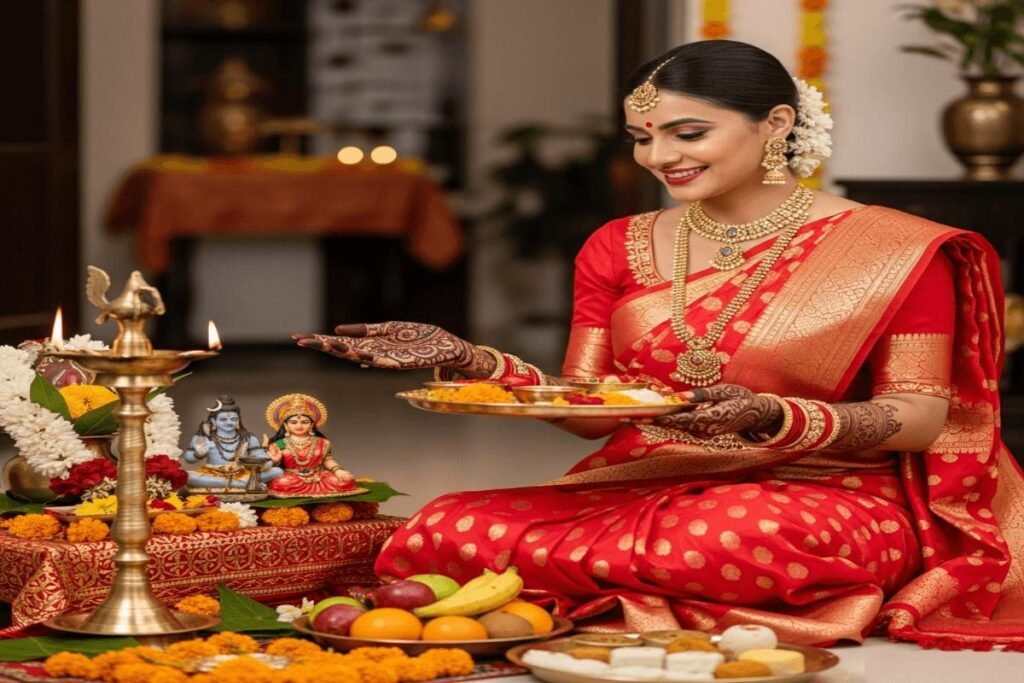
The Hartalika Teej Puja Vidhi traditionally begins with cleaning and preparing the puja area. Devotees take a bath, wear clean clothes, and prepare the place of worship with devotion. On this day, idols or symbolic forms of Lord Shiva and Goddess Parvati are worshipped, and Lord Ganesha is also traditionally included in the puja.
The Shiva-Parvati idols may be decorated with flowers, clothing, ornaments, and other traditional offerings. Devotees then offer water, flowers, fruits, sweets, incense, lamps, and other puja materials while chanting prayers and mantras. The exact method can differ according to regional customs and family traditions, so devotees may follow the puja procedure traditionally practiced in their household.
How to Perform Hartalika Teej Puja at Home
Performing Hartalika Teej Puja at home can be a deeply devotional experience. Begin by cleaning the worship area and placing the idols or images of Lord Shiva and Goddess Parvati on a clean platform. After taking a bath and wearing clean clothes, devotees can begin the puja with prayers to Lord Ganesha before proceeding with the Shiva-Parvati worship.
The idols can be decorated with flowers, clothing, and traditional ornaments. Devotees can offer flowers, fruits, sweets, incense, and a diya while reciting appropriate prayers. The Hartalika Teej Vrat Katha can also be read or listened to as part of the observance. Finally, devotees can perform Shiva-Parvati Aarti and offer their prayers with devotion.
Hartalika Teej Puja Samagri
The exact Hartalika Teej Puja Samagri can vary according to regional and family traditions. Commonly used items may include a clean puja platform, idols or images of Lord Shiva and Goddess Parvati, flowers, leaves, fruits, sweets, incense sticks, diya, ghee or oil, sandalwood, roli, kumkum, rice, water, and traditional offerings.
Women may also prepare traditional Solah Shringar items for the festival. These can include bangles, sindoor, bindi, mehendi, jewellery, and other traditional adornments. Offering or donating items associated with marital prosperity is also part of some regional traditions. Recent 2026 festival guidance also highlights the traditional importance of puja materials, Panchamrit, bhog, donation items, and Solah Shringar.
Importance of Solah Shringar on Hartalika Teej
Solah Shringar has a special cultural and traditional significance during Hartalika Teej. Married women often dress in traditional clothes and adorn themselves with jewellery, bangles, mehendi, bindi, sindoor, and other forms of traditional decoration. These practices are associated with suhag, marital happiness, beauty, prosperity, and devotion.
For many women, getting ready for Hartalika Teej is not simply about appearance. It is part of the cultural celebration and a way of expressing devotion, joy, and respect for the traditions associated with Goddess Parvati and married life.
Hartalika Teej Vrat Katha
The Hartalika Teej Vrat Katha revolves around Goddess Parvati’s deep devotion and determination to obtain Lord Shiva as her husband. According to the traditional story, Parvati performed severe penance for a long period with the desire to marry Lord Shiva. Her father had another marriage arrangement in mind, so Parvati’s friend took her to a secluded forest where she could continue her spiritual practice.
Goddess Parvati continued her penance with complete dedication, and eventually Lord Shiva accepted her devotion. The story is therefore remembered on Hartalika Teej as a symbol of devotion, determination, faith, and the divine bond between Shiva and Parvati.
Why Do Married Women Keep Hartalika Teej Vrat?
Married women traditionally observe Hartalika Teej for the well-being, longevity, and prosperity of their husbands and family. The festival is also associated with marital harmony, love, devotion, and a happy married life.
The vrat is considered an expression of devotion toward Lord Shiva and Goddess Parvati. Women pray for a strong and peaceful marital relationship and seek divine blessings for the prosperity and happiness of their family. These are traditional religious beliefs, and the spiritual significance of the festival can vary between families and regions.
Why Do Unmarried Women Observe Hartalika Teej?
Hartalika Teej is not limited to married women. In many traditions, unmarried women also observe the fast and worship Lord Shiva and Goddess Parvati with the hope of receiving blessings for a suitable and compatible life partner.
The story of Goddess Parvati’s devotion toward Lord Shiva is particularly meaningful to unmarried women who wish to pray for a loving, respectful, and harmonious future relationship. The festival can therefore be observed as an expression of faith, devotion, and personal prayer.
Hartalika Teej and the Importance of Shiva-Parvati Worship
Lord Shiva and Goddess Parvati are traditionally viewed as an important divine couple representing complementary energies, devotion, balance, and harmony. Their relationship is deeply significant in Hindu religious traditions.
During Hartalika Teej, devotees worship both Shiva and Parvati together and seek blessings for love, harmony, stability, prosperity, and family well-being. The festival provides an opportunity to focus on devotion and reflect upon the values of mutual respect, commitment, patience, and spiritual connection.
What Should Be Avoided During Hartalika Teej?
Hartalika Teej is traditionally observed with discipline, devotion, and purity of intention. Devotees generally try to maintain a peaceful environment, avoid unnecessary arguments, and focus their attention on prayer and worship. Many families also follow traditional dietary and lifestyle restrictions during the vrat.
However, exact restrictions differ according to community, region, and family tradition. It is therefore better to follow the customs traditionally observed by your family rather than assuming that every rule applies universally.
How to Make Hartalika Teej Spiritually Meaningful
The deeper meaning of Hartalika Teej goes beyond simply observing a fast. The festival can be used as an opportunity to develop patience, gratitude, devotion, and emotional connection. Instead of focusing only on rituals, devotees can spend time reading or listening to the Hartalika Teej Katha, chanting Shiva-Parvati mantras, performing meditation, and offering sincere prayers.
The festival can also encourage couples and families to reflect on the importance of mutual respect, understanding, trust, and emotional support. These values can help bring the spiritual message of the festival into everyday life.
Hartalika Teej 2026: Important Things to Remember
The most important date to remember is Monday, September 14, 2026. The Tritiya Tithi begins on September 13 and ends on September 14 morning, and the principal Hartalika Teej observance is on September 14. The exact puja muhurat varies according to location because sunrise and local Panchang calculations differ.
Devotees should therefore prepare their puja samagri in advance, decide whether they will follow a Nirjala or another form of fast according to their family tradition and health, and check the local Panchang for the exact puja timing.
Hartalika Teej 2026 and Spiritual Wellness
Festivals such as Hartalika Teej also provide an opportunity to focus on spiritual wellness and inner peace. Preparing for the puja, maintaining a devotional environment, chanting prayers, meditating, and spending time in reflection can help create a meaningful spiritual experience.
For people interested in astrology, numerology, Tarot, Vastu, or other spiritual practices, festivals can also become an opportunity for self-reflection and setting positive intentions. However, religious rituals and spiritual practices should be approached with faith and personal understanding rather than fear or unrealistic expectations.
Frequently Asked Questions About Hartalika Teej 2026
When is Hartalika Teej in 2026?
Hartalika Teej will be celebrated on Monday, September 14, 2026.
What is the Hartalika Teej Puja Muhurat in 2026?
The puja timing varies by location. For example, Drik Panchang lists 5:51 AM to 7:06 AM for Lucknow and 6:05 AM to 7:06 AM for Delhi on September 14, 2026. For other cities, local sunrise-based Panchang timings should be followed.
Who can observe Hartalika Teej Vrat?
Traditionally, married women observe the fast for marital happiness and the well-being of their husbands, while unmarried women may observe it while praying for a suitable life partner.
Is Hartalika Teej Vrat Nirjala?
Many women traditionally observe Hartalika Teej as a Nirjala fast, without food or water. However, fasting practices vary, and people with health concerns should not undertake a strict fast without appropriate medical advice.
What is worshipped on Hartalika Teej?
Lord Shiva and Goddess Parvati are the primary deities worshipped during Hartalika Teej. Lord Ganesha is also traditionally included in the puja.
Can unmarried girls observe Hartalika Teej?
Yes. In many traditions, unmarried women observe Hartalika Teej to pray for a suitable and compatible future life partner.
Hartalika Teej 2026 is a significant festival of devotion, faith, love, and marital harmony. Celebrated on September 14, 2026, the festival brings devotees together to worship Lord Shiva and Goddess Parvati and seek blessings for happiness, prosperity, harmony, and a fulfilling married life. The traditional Hartalika Teej Vrat is observed with dedication, and many women undertake a Nirjala fast as part of the religious practice. Along with fasting, the festival includes Shiva-Parvati Puja, Hartalika Teej Vrat Katha, traditional decorations, Solah Shringar, offerings, prayers, and Aarti. While the rituals and customs may vary between regions and families, the central message remains one of devotion, determination, faith, and spiritual connection. The exact puja muhurat should be checked according to the local Panchang because timings differ by location.