Navratri is one of the most spiritually significant Hindu festivals dedicated to the worship of Goddess Durga and her nine divine forms, collectively known as Navdurga. The word “Navratri” comes from two Sanskrit words—“Nav” meaning nine and “Ratri” meaning nights. During these nine nights and ten days, devotees worship different manifestations of Goddess Durga, observe fasting, perform prayers, chant mantras, visit temples, and participate in devotional celebrations.
Sharad Navratri 2026 will be especially important for devotees who wish to begin a period of spiritual reflection, prayer, purification, and positive transformation. Every day of Navratri has its own religious significance, associated form of Goddess Durga, traditional colour, offerings, and spiritual symbolism.
Whether you are planning to observe a complete Navratri fast, perform Ghatasthapana, worship Goddess Durga at home, participate in Kanya Pujan, or simply want to understand the festival better, this complete guide will help you learn about Navratri 2026, its dates, puja vidhi, auspicious muhurat, nine forms of Goddess Durga, fasting rules, bhog, mantras, and important rituals.
What is Navratri?
Navratri is a nine-night Hindu festival devoted primarily to Goddess Durga, the divine feminine power or Shakti. Although Navratri occurs multiple times during the Hindu calendar year, Sharad Navratri, observed around September–October, is one of the most widely celebrated forms.
The festival represents the victory of good over evil and is traditionally associated with the divine battle between Goddess Durga and the demon Mahishasura. The nine forms of Goddess Durga worshipped during Navratri represent different qualities of divine feminine energy, including strength, wisdom, courage, peace, compassion, prosperity, and spiritual awakening.
For devotees, Navratri is not only a religious festival but also a time for self-discipline and inner purification. Many people use these nine days to reduce distractions, follow a sattvic diet, spend more time in prayer and meditation, and seek blessings for peace, health, prosperity, relationships, and personal growth.
When is Navratri 2026?
Sharad Navratri 2026 begins on Sunday, October 11, 2026, and concludes on Monday, October 19, 2026, with Navami. The following day, October 20, 2026, is celebrated as Vijayadashami or Dussehra.
The exact timing of rituals such as Ghatasthapana depends on the local sunrise, sunset, tithi, and geographical location. Therefore, devotees should check a reliable local Panchang for the precise muhurat according to their city.
Navratri 2026: 9 Days and Goddess Durga Forms
Each day of Navratri is dedicated to one of the nine forms of Goddess Durga. These forms are collectively called Navdurga.
Day 1 – Maa Shailputri
The first day of Navratri is dedicated to Maa Shailputri, regarded as the daughter of the Himalayas. She is traditionally depicted riding a bull and carrying a trident and lotus.
Maa Shailputri represents strength, stability, purity, and the foundation of spiritual growth. Devotees begin Navratri by worshipping her and seeking blessings for courage, peace, and stability in life.
On this day, devotees traditionally perform Ghatasthapana or Kalash Sthapana, depending on the local Panchang and ritual tradition.
Day 2 – Maa Brahmacharini
The second day is dedicated to Maa Brahmacharini. She represents devotion, discipline, determination, and spiritual wisdom.
She is traditionally shown carrying a rosary and a water vessel. Worshipping Maa Brahmacharini is believed by devotees to encourage patience, self-control, concentration, and dedication.
For people going through challenging phases of life, this day can be observed as an opportunity to practice patience and maintain faith.
Day 3 – Maa Chandraghanta
The third day is dedicated to Maa Chandraghanta, traditionally depicted with a crescent moon on her forehead.
She represents courage, bravery, peace, and protection. Her worship is associated with developing inner strength and overcoming fear.
Devotees often pray to Maa Chandraghanta for protection from negativity and for greater confidence while dealing with personal and professional challenges.
Day 4 – Maa Kushmanda
The fourth day of Navratri is dedicated to Maa Kushmanda. She is associated with creative energy and the cosmic power that sustains life.
The name Kushmanda is traditionally interpreted through the idea of cosmic creation and energy. Devotees worship her for health, vitality, prosperity, and positive energy.
This day can also be viewed as a reminder to appreciate the creative and nurturing energy present in life.
Day 5 – Maa Skandamata
The fifth day is dedicated to Maa Skandamata, the mother of Lord Kartikeya, also known as Skanda.
She represents motherhood, compassion, protection, and nurturing energy. Devotees pray to her for family harmony, emotional strength, and blessings for children.
The worship of Skandamata reminds devotees of the importance of unconditional love, care, and compassion.
Day 6 – Maa Katyayani
The sixth day is dedicated to Maa Katyayani, a powerful manifestation of Goddess Durga.
She is traditionally associated with courage, strength, protection, and the destruction of negative forces. Maa Katyayani is especially revered in traditions connected with prayers for marriage and relationships.
Devotees may use this day to pray for clarity, healthy relationships, emotional strength, and the courage to overcome obstacles.
Day 7 – Maa Kaalratri
The seventh day is dedicated to Maa Kaalratri, one of the most powerful and fierce forms of Goddess Durga.
Although her appearance is traditionally described as fierce, she is considered protective and benevolent toward devotees. Her worship represents the destruction of fear, ignorance, negativity, and darkness.
Devotees pray to Maa Kaalratri for courage and protection and may focus on releasing fear and negative thoughts during their spiritual practices.
Day 8 – Maa Mahagauri
The eighth day is dedicated to Maa Mahagauri, traditionally associated with purity, peace, compassion, and spiritual cleansing.
Ashtami is considered an important day of Navratri in many Hindu traditions. Many devotees perform special puja, offer bhog, and conduct Kanya Pujan on Ashtami or Navami according to their family tradition.
Maa Mahagauri’s worship is associated with seeking peace, purity, and a renewed sense of spiritual balance.
Day 9 – Maa Siddhidatri
The ninth and final day is dedicated to Maa Siddhidatri.
She is associated with spiritual wisdom, divine blessings, and siddhis or spiritual attainments in traditional Hindu belief. Devotees worship Maa Siddhidatri at the conclusion of the nine-day Navratri period.
Navami is often considered a day for completing the Navratri puja and seeking blessings before Vijayadashami.
Ghatasthapana During Navratri
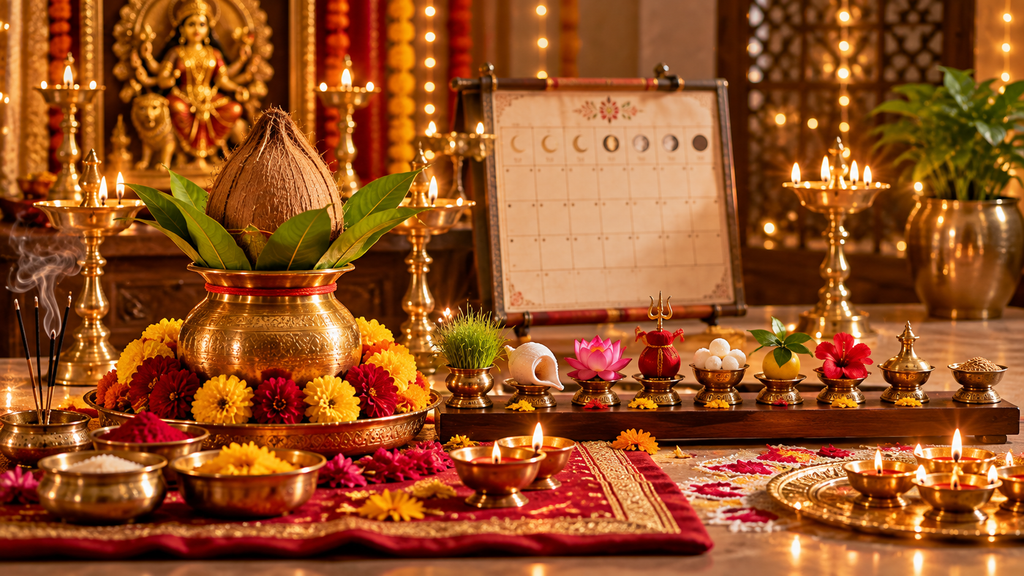
Ghatasthapana, also called Kalash Sthapana, marks the beginning of Navratri worship in many traditions. A sacred kalash is established as part of the puja, symbolizing divine presence, abundance, and auspiciousness.
The ritual generally involves preparing a clean puja space, placing a sacred pot or kalash, filling it with water and traditional items according to one’s ritual practice, placing mango leaves or other prescribed elements, and positioning a coconut on top.
Barley or other grains may also be sown near the kalash in some traditions. Their growth during the nine days is viewed symbolically as a representation of prosperity, life, and spiritual development.
Because Ghatasthapana has specific tithi and timing requirements, devotees should follow the Panchang for their location rather than relying on a single nationwide clock time.
Navratri 2026 Ghatasthapana Muhurat
The Ghatasthapana muhurat is traditionally determined based on the Pratipada tithi and the local sunrise. The most suitable period can vary depending on the location.
Therefore, if you are performing Ghatasthapana at home, check the local Panchang for your city on October 11, 2026 to confirm the exact auspicious timing.
Performing the ritual during the prescribed period is traditionally considered important because Ghatasthapana marks the formal beginning of the Navratri worship cycle.
Navratri Puja Vidhi
Navratri puja can be performed according to family customs, regional traditions, and individual spiritual practices. A simple home puja generally begins with cleaning the worship area and taking a peaceful, devotional approach.
Devotees may begin by taking a bath and wearing clean clothes. The puja space is cleaned and decorated, and the idol or image of Goddess Durga is placed respectfully. If Ghatasthapana is being performed, the kalash is established according to the family’s traditional procedure.
The devotee then invokes Goddess Durga and performs deepa prajwalan, followed by offerings such as flowers, fruits, water, incense, and bhog. The specific offerings can differ according to the form of Goddess Durga being worshipped.
After the offerings, devotees may recite Durga Chalisa, Durga Saptashati, Devi Mahatmya, or other prayers according to their tradition and ability. Finally, aarti is performed and prasad is distributed among family members.
What Should You Keep in the Navratri Puja Thali?
A traditional Navratri puja setup may include items such as:
- Goddess Durga idol or picture
- Kalash
- Coconut
- Mango leaves
- Flowers
- Kumkum
- Roli
- Akshat
- Incense sticks
- Diya and ghee or oil
- Fruits
- Sweets or traditional bhog
- Clean water
- Navratri-specific offerings
- Aarti thali
The exact requirements vary according to regional customs and the type of puja being performed.
Navratri Fasting Rules
Many devotees observe a fast during Navratri. Fasting practices can vary considerably from one family and region to another.
Some people observe a complete fast, while others eat one sattvic meal a day. Some devotees consume fruits, milk, nuts, sabudana, kuttu, singhara flour, potatoes, and other foods traditionally permitted during fasting.
Commonly avoided foods during a Navratri fast may include regular grains, certain pulses, meat, eggs, and foods containing onion and garlic, depending on the devotee’s tradition.
The purpose of fasting is traditionally connected with self-discipline, devotion, purification, and reducing attachment to everyday indulgences. Anyone with dietary or medical restrictions should follow appropriate professional advice rather than undertaking a restrictive fast simply because it is customary.
What Foods Can Be Eaten During Navratri?
Popular fasting foods include sabudana khichdi, kuttu roti, singhara atta preparations, samak rice, roasted makhana, fruits, nuts, potatoes, and dairy products.
However, fasting rules are not identical everywhere. A food accepted during Navratri in one region may not be considered appropriate in another.
The most important aspect is to follow your family’s religious tradition while maintaining a balanced and suitable diet.
Navratri Bhog and Prasad
Offering bhog to Goddess Durga is an important part of Navratri worship. Devotees traditionally offer fruits, sweets, coconut, milk-based preparations, and other sattvic foods.
Different forms of Goddess Durga may have different traditional offerings associated with them. Many families also prepare special fasting dishes and offer them as prasad before consuming them.
The devotional intention behind the offering is considered more important than making an elaborate meal.
Navratri Mantras
Devotees may chant different mantras during Navratri according to their spiritual tradition.
One widely known mantra dedicated to Goddess Durga is:
“Om Dum Durgaye Namaha.”
Chanting can be incorporated into daily prayer and meditation. Some devotees also recite Durga Chalisa, Devi Kavach, Argala Stotram, Keelakam, or passages from Devi Mahatmya according to their tradition.
If you are new to mantra practice, beginning with a simple mantra and chanting it with concentration and devotion can be a practical approach.
Importance of Kanya Pujan During Navratri
Kanya Pujan, also known as Kanjak or Kanya Bhoj in some regions, is traditionally performed on Ashtami or Navami.
Young girls are respectfully invited, their feet may be washed as part of the ritual, and they are offered food, gifts, and blessings. In many traditions, the girls are symbolically regarded as manifestations of the divine feminine.
The number of girls and the exact procedure can differ according to family and regional customs.
Kanya Pujan is also a reminder of the cultural and spiritual significance given to feminine energy in Shakti traditions.
Navratri and the Significance of Nine Nights
The nine nights of Navratri can be understood as a spiritual journey through different qualities of divine feminine energy.
The early days emphasize strength and determination. The middle portion focuses on courage, creativity, protection, and nurturing energy, while the concluding days emphasize purity, wisdom, and spiritual fulfilment.
For many devotees, these nine days provide an opportunity to slow down, reflect on personal habits, practice gratitude, and reconnect with their spiritual beliefs.
Navratri and the Victory of Good Over Evil
Navratri is closely connected with the story of Goddess Durga’s battle with Mahishasura. According to Hindu tradition, Mahishasura had gained immense power and created suffering among the divine beings and people. Goddess Durga fought against him and ultimately defeated him.
The story symbolically represents the triumph of divine strength over destructive forces.
Navratri therefore carries a broader message of courage, righteousness, self-discipline, and the belief that darkness can be overcome through inner and divine strength.
Navratri Celebrations Across India
Navratri is celebrated differently across various parts of India.
In West Bengal, Durga Puja becomes the centre of major cultural and religious celebrations, with beautifully decorated pandals, artistic idols, devotional music, and community gatherings.
In Gujarat, Navratri is famous for energetic Garba and Dandiya celebrations.
In North India, devotees commonly observe fasts and participate in Ramleela and other devotional programmes, eventually leading to Dussehra.
In parts of South India, traditions such as Golu or Bommai Kolu are associated with the festival.
Although customs differ, the central theme remains devotion to the divine feminine and the celebration of spiritual strength.
Navratri, Garba and Dandiya
Garba and Dandiya have become internationally recognized parts of Navratri celebrations, especially in Gujarat and other communities.
Garba is traditionally performed in a circular formation around a lamp or symbolic representation of divine energy. The circular movement can be understood as representing the continuity of life and the presence of Shakti.
Dandiya Raas is another popular traditional dance associated with Navratri. Modern Navratri events often combine traditional music and dance with large community gatherings.
What Should You Do During Navratri 2026?
Navratri can be observed through simple and meaningful practices. Devotees may begin their mornings with prayer, maintain cleanliness in their home and puja space, light a diya, chant a mantra, and spend some quiet time in meditation.
Many people also choose to reduce unnecessary arguments, negative thoughts, excessive distractions, and unhealthy habits during these nine days.
Helping others, donating food, supporting people in need, practicing gratitude, and treating others with compassion can also make the festival more meaningful.
Things to Avoid During Navratri
Traditionally, devotees who observe Navratri may choose to avoid certain foods and behaviours as part of spiritual discipline.
Depending on personal and family traditions, people may avoid non-vegetarian food, alcohol, tobacco, excessive indulgence, and certain grains or ingredients during fasting.
Beyond food restrictions, Navratri can be used as a period to consciously reduce anger, negativity, gossip, unnecessary conflict, and harmful habits.
The festival is ultimately about devotion, discipline, and inner transformation rather than simply following external restrictions.
Navratri and Spiritual Wellness
Navratri can also be a meaningful time for spiritual wellness and self-reflection. The nine-day period encourages devotees to focus their attention inward, create peaceful routines, and reconnect with their personal beliefs.
Practices such as meditation, prayer, breathwork, gratitude, journaling, and mindful reflection may help create a calmer daily routine.
For people interested in spiritual practices such as energy work, tarot guidance, numerology, meditation, or other holistic approaches, Navratri can be used as a period for reflection and setting positive intentions. These practices should be viewed as complementary spiritual or wellness practices rather than substitutes for professional medical or mental-health care when that is needed.
Navratri 2026: A Time for New Intentions
Many people use Navratri as an opportunity to set new intentions for their personal lives. You may choose to focus on improving your relationships, developing self-confidence, becoming more disciplined, creating healthier habits, or finding greater emotional balance.
Instead of making many resolutions at once, choose a few meaningful intentions and work on them consistently.
The nine days can serve as a symbolic reminder that meaningful transformation often develops through patience, discipline, awareness, and consistent effort.
Navratri Ashtami and Navami
Ashtami and Navami are among the most important days of Navratri for many devotees. Special prayers, havans, bhog, and Kanya Pujan may be performed according to family traditions.
Some devotees conclude their fast on Ashtami, while others continue until Navami or Vijayadashami. There is no single universal practice because customs vary across communities.
If you are following a specific family or regional tradition, it is best to follow that tradition and consult a local Panchang for the relevant tithi.
Vijayadashami After Navratri
The nine-day Navratri period concludes with Vijayadashami, commonly known as Dussehra.
Vijayadashami represents victory and is associated with different traditions across India. In the Ramayana tradition, the day marks Lord Rama’s victory over Ravana. In the Durga tradition, it follows the celebration of Goddess Durga’s victory over Mahishasura.
The festival therefore carries a powerful message of righteousness, courage, and the triumph of good over evil.
How to Make Navratri 2026 More Meaningful
Instead of observing Navratri only as a festival, you can use these nine days for conscious self-reflection.
Start your day with gratitude. Keep your surroundings clean and peaceful. Spend a few minutes in prayer or meditation. Be mindful of your words and actions. Avoid unnecessary negativity and try to help someone whenever possible.
You can also maintain a simple Navratri journal and write down one intention each day. At the end of the nine days, reflect on what you learned about yourself.
This approach can make Navratri a period of personal and spiritual awareness rather than only a series of rituals.
Final Thoughts on Navratri 2026
Navratri 2026 is an opportunity to celebrate the divine feminine energy represented through the nine forms of Goddess Durga while creating space for devotion, discipline, reflection, and positive intentions.
From Maa Shailputri on the first day to Maa Siddhidatri on the ninth day, each form carries its own traditional symbolism and spiritual significance. Ghatasthapana marks the beginning of the sacred period, daily puja strengthens devotional practice, fasting encourages discipline, and Kanya Pujan honours feminine energy.
Whether you celebrate Navratri through elaborate rituals, simple home prayers, meditation, fasting, temple visits, Garba, or quiet personal reflection, the festival can be a meaningful reminder to cultivate courage, compassion, purity, wisdom, and inner strength.